Upstream or Adrift
Choosing What Forms the Soul

There are, in the end, only two kinds of things in life: those that draw us closer to God, and those that draw us away.
That sounds severe to modern ears where we live in the grey. We prefer softer categories. We like to say that most things are neutral, that meaning depends entirely on how we use them, that the moral life is mostly about avoiding the obviously wicked while enjoying the rest in peace. But if we are honest about the condition of the human soul, we know life is not so still and tidy. We are not standing on dry ground arranging objects on a shelf. We are in a river.
Some things help us move upstream, against the pull, toward clearer water, higher ground, and the source itself. Other things carry us downriver like driftwood, almost effortlessly, toward a destination we did not consciously choose. And then there are those things that do not seem to move us much at all, but keep us circling in place like a stick caught in a whirlpool: not drowning outright, perhaps, not racing toward visible ruin, but never truly advancing. Oscillating. Repeating. Going nowhere. Like a dog tracing the outer edge of its chain, mistaking motion for freedom.
That image may sound odd now. Few dogs are chained anymore. But souls still are.
This came to mind for me through something ordinary enough: music.
Not music in the sense of genre labels. I do not mean the old debates between classical and rock, or jazz and country, or hymns and folk songs. Those categories tell us less than we imagine. What matters more is what a thing does to the soul. In that sense, there are three broad kinds of music most people recognize instinctively, even if they would not use the same words: music that inspires, music that hypnotizes, and music that feeds rage.
Yes, it is “just music,” as people often say. But music is never merely just sound in the air. It is one of the most powerful forms of human input. It enters without knocking. It bypasses many of our ordinary defenses. A vulgar image can be turned away from. A bad argument can be answered. But music moves through us before we have time to interrogate it. It sets a rhythm not only for the body but for our soul. We can feel it. It can rouse courage, tenderness, reverence, grief, lust, nostalgia, aggression, fear, resignation, and longing. It can help a man pray. It can help him sin. It can make him feel alive. It can also make him easier to lead.
We are, in that respect, more like the rats in the old tale of the Pied Piper than we like to admit. We move without always realizing we are being moved.
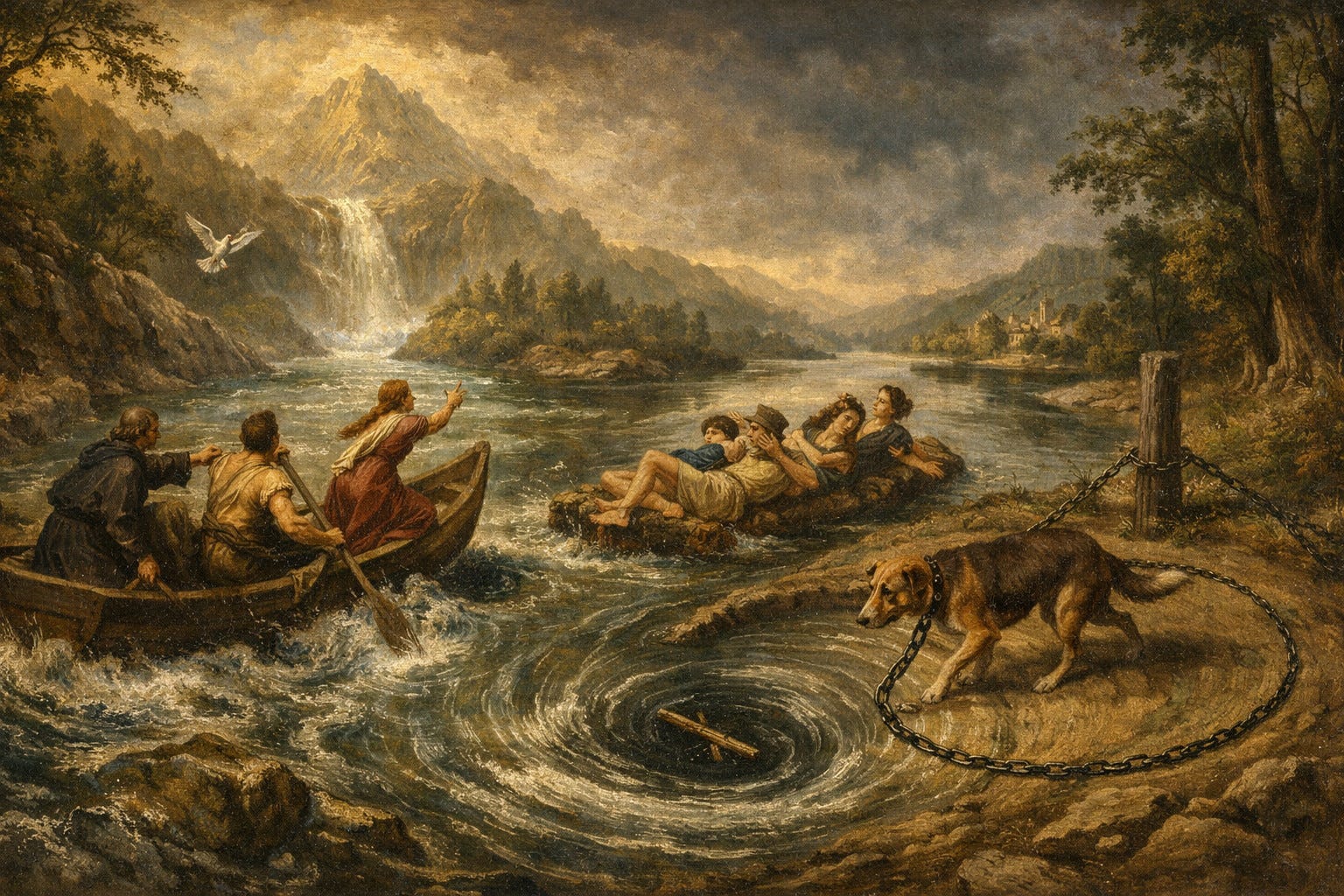
Sometimes, of course, we do realize it. Especially when we are young. Though if we are honest, rebellion is not the exclusive property of youth. There are gray-haired adolescents everywhere. There are middle-aged men and women who still define freedom as the refusal to be governed by anything higher than appetite. There are elderly rebels who have long since lost the energy to scandalize anyone else but still nourish a private contempt for order, duty, chastity, humility, and grace.
In those seasons, the soul is drawn to sounds that confirm its posture. If I am angry, I reach for what intensifies anger. If I feel alienated, I reach for what flatters alienation. If I resent limits, I seek an anthem for resentment. If I want permission to dissolve, to indulge, to mock, to degrade, to harden, to use others or myself, I look for a soundtrack that will bless the mood.
That is one of the great lies of modern freedom: that expression is harmless because it is expressive. But expression is never merely expressive. It is also formative. We become what we repeat. We are shaped by what we rehearse. If I spend enough time bathing my inner life in contempt, vulgarity, lust, chaos, grievance, self-pity, submission, or domination, eventually these do not remain moods. They become tendencies. Then habits. Then traits. Then our very character.
And character, once set, becomes destiny.
This is why the question is not simply whether a song, a film, a novel, a joke, a friendship, a social atmosphere, or a habit is technically permissible. The deeper question is: what does it make easier in me? Does it make prayer easier or harder? Does it make gratitude easier or harder? Does it strengthen my patience, chastity, honesty, courage, mercy, and reverence? Or does it dull them? Does it open my soul upward, or flatten it inward? Does it dispose me to sacrifice, or to self-absorption? Does it make me more able to love what is true and beautiful, or more willing to settle for what is stimulating and base?
These are old questions, though modern people often hear them as oppressive. We have been trained to think of moral seriousness as a kind of censorship. But that is a confusion. To say that not everything is good for the soul is not censorship. It is spiritual realism.
No serious person calls a dietitian oppressive for distinguishing nourishment from poison. No athlete complains that a trainer is censoring him by warning against habits that weaken stamina. No musician thinks discipline is an enemy of music. The pianist does not become free by ignoring scales. He becomes free by submitting himself to what forms excellence. It is only in the moral and spiritual life that modern man insists that standards are an insult, that appetite is innocence, and that restraint is violence.
But the soul is not flattered into flourishing. It is formed by what it loves.
That includes art. That includes entertainment. That includes the ambient culture we breathe in every day without noticing. There is no corner of life exempt from this law. Everything leaves a trace. Every repeated exposure is a kind of liturgy, secular or sacred. It teaches us what to admire, what to laugh at, what to normalize, what to excuse, what to desire, what to fear, whom to pity, and whom to despise. It tells us whether the human person is a mystery to be reverenced or a bundle of impulses to be exploited. It tells us whether the body is a temple or a toy. It tells us whether suffering has meaning or is merely an interruption of pleasure. It tells us whether freedom is ordered toward the good or merely the power to choose among appetites.
This is why bad art is not only aesthetically bad. Sometimes it is spiritually corrosive. Not because it lacks technical skill, but because it trains us in false seeing.
There is art that enlarges the soul by showing us reality more truthfully: the nobility and tragedy of man, the cost of love, the beauty of repentance, the gravity of evil, the splendor of sacrifice, the ache for transcendence, the stubborn persistence of grace. And there is art that shrinks the soul by making us more cynical, more lustful, more amused by degradation, more numb to cruelty, more casual about desecration, more bored by innocence, more impatient with goodness.
Some of it drags us downstream quickly. Some of it merely stagnates us. The latter may be more dangerous in the long run, because it often arrives without scandal. It does not shock. It anesthetizes. It fills the hours. It keeps us circling.
A great many people are not in open rebellion against God. They are simply spiritually stalled. Not moving toward sanctity, not decisively rejecting it either. Distracted, saturated, entertained, weary, half-awake. Their lives are full of noise but poor in meaning. Their imaginations have been colonized by triviality. They are not possessed by obvious wickedness so much as pacified by endless low-grade indulgence. They are held in place by a culture that excels at keeping souls occupied and undernourished.
This is one reason the recovery of beauty matters so much.
Beauty is not a luxury item for refined believers. It is a necessity for damaged souls. Real beauty does not distract us from truth; it escorts us toward it. It does not stupefy; it inspires. It does not inflame appetite; it orders desire. It reminds us that the world is not merely material, not merely useful, not merely consumable. It teaches us that reality is a gift before it is a resource. It teaches wonder. It restores proportion. It rebukes vulgarity not by scolding but by outshining it.
And because beauty does this, it becomes morally serious. A beautiful church, a reverent liturgy, a noble melody, a luminous poem, a merciful act, a family meal marked by gratitude, a friendship free of performative cruelty, a life lived with integrity: all these become counter-cultural in an age that confuses shock with originality and noise with vitality.
The answer, then, is not censorship. It never is.
You cannot censor the impulses of rebellion out of the human heart. You cannot legislate men into holiness. You cannot purify a culture by smashing every idol in public while bowing to subtler idols in private. And you certainly cannot defeat the ancient enemy by pretending he is merely a content problem.
No, the Christian answer is harder and deeper. We pray. We make reparation. We choose beauty. We cultivate virtue. We form communities capable of sustaining the good. We support parishes that are serious about worship, truth, charity, and friendship. We raise children with standards and warmth, with moral clarity and tenderness, with beauty in the home and seriousness in speech. We examine what we consume, what we repeat, what we celebrate, and what we excuse.
Most of all, we live differently.
The first Christians did not conquer paganism chiefly by political mastery, nor by becoming a more efficient version of the empire they opposed. They changed the world because they were the world’s contradiction. They were poor without being defeated, chaste without being cold, joyful without being frivolous, sacrificial without being resentful, and steadfast without being cruel. They rescued infants. They honored widows. They cared for the sick. They faced death with an unnerving peace. Their very lives made paganism look thin.
That is still the task.
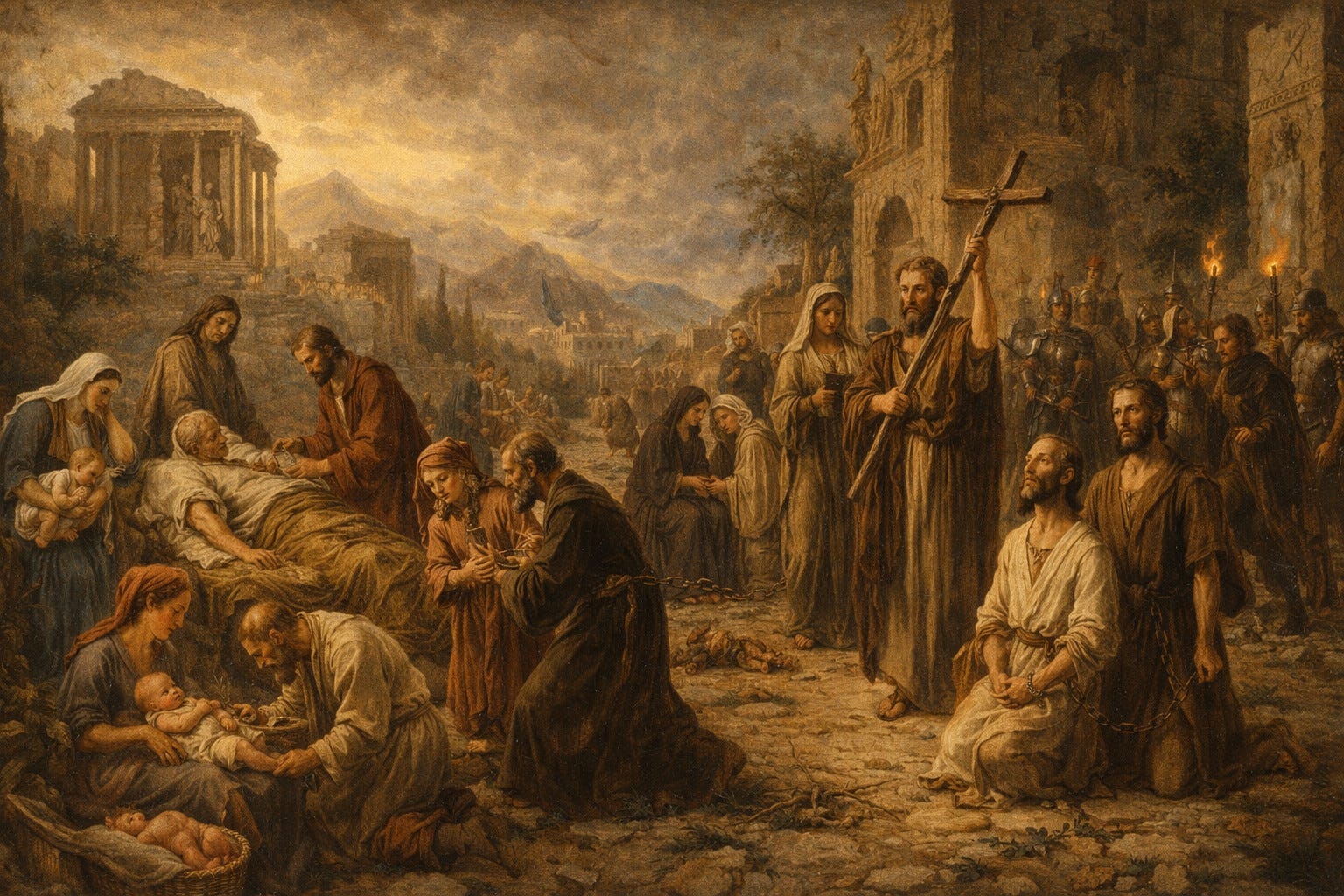
We are told constantly that the faithful should become more like the culture if they hope to influence it. But history suggests nearly the opposite. What converts is not mimicry. It is radiant truth. It is the strange authority of a life clearly ordered toward a good the world cannot provide. The lapsed Catholic, the unbeliever, the thoughtful skeptic, the wounded rebel, the bored sensualist, the exhausted cynic: none of them are ultimately saved by slogans. They are moved by an encounter with something unmistakably more alive than the empty alternatives they have tried.
That encounter may begin anywhere grace breaks through; a sacred note, a steady friend, a confession long delayed, or grief filled with hope.
We should remember this when we look at those drifting downstream.
It is easy to become disgusted. Easy to talk as though those caught in degradation are simply enemies of the good. Easy to mistake exasperation for zeal. But many are blinded and deafened by what might be called, without exaggeration, the manna of hell: a constant supply of pleasures, outrages, permissions, and distractions that keep them from feeling the full ache of their true hunger. They are not always malicious. Often they are starved, sedated, manipulated, wounded, lonely, ashamed, fatherless, faithless, and exhausted. Their rebellion is real, yes, but so is their misery.
So we must be merciful.
Mercy does not mean pretending darkness is light. It means refusing to forget that souls can turn, even late. St. Dismas, the good thief, found paradise in his final hour. That fact should permanently destroy our temptation to despair over anyone. It should also destroy our complacency about ourselves. For some, we may be present in their last moment of openness. For others, their first moment of conversion. We may meet them while they hang on a cross of consequences, or while they stand at the foot of the mountain, just beginning to see that there is a path upward.
But we cannot help lead anyone upstream if we ourselves have made peace with drifting.
This is the heart of the matter. The Christian life is not merely about avoiding the dramatic sins that make for public scandal. It is about becoming the kind of person who can still hear God clearly in a noisy age. It is about learning again how to choose what sanctifies rather than which numbs. It is about guarding the gates of the soul without becoming fearful or brittle. It is about asking, with increasing seriousness, what every part of life is doing to us.
Not just politics or pleasures; our playlists, habits, jokes, screens, ambitions, rooms, speech, silences, friendships, entertainments, and even our loves demand scrutiny too.
Everything matters because we are creatures meant for communion with God, and anything that weakens that orientation, however stylish or ordinary, is not small merely because it is common.
So choose deliberately.
Choose the song that steadies the heart instead of agitating it. Art that ennobles rather than degrades. Friendship that sharpens conscience rather than erodes it. A parish that calls you higher, not one that flatters your indifference. Prayer when noise would be easier. Reverence and mercy when mockery is fashionable. Beauty when ugliness is profitable. Confession when pride prefers delay. Gratitude when resentment offers its counterfeit energy. Choose what reminds you that your soul was made for more than stimulation.
Keep moving upstream.
That is where clarity returns and where freedom becomes real. That is where art regains its dignity, music regains its purpose, and life regains its direction. Not because every beautiful thing is explicitly religious, but because every truly beautiful thing bears, however faintly, the fingerprints of its Maker.
And that is the deepest truth beneath all of this: the world is not morally weightless. It is morally charged. Everything leans somewhere. Everything trains us. Everything invites us either toward worship or away from it.
The task is not to fear that fact, but to live by it consciously.
To ask, again and again, of the things we welcome into our lives: Does this help me love God more? Does this make me more alive to truth, or capable of prayer, or fit for sacrifice, or ready for mercy, or more human in the highest sense?
If it does, keep it close.
If it pulls you downward, cast it off.
If it only keeps you circling, leave the whirlpool and go upstream.