The Memory Ward
Where the Cured Are Kept

Dr. Elijah Kroft learned young that there were worse things than death.
His father had still been breathing when the man disappeared.
Not physically. Physically, Thomas Kroft had lingered for eight more years in a trim ranch house outside Hartford, sleeping in the same bed, eating at the same table, staring at the same television every night as if it were explaining a language he had once spoken. But the man who had taught Elijah to bait a hook, change a tire, and whistle Sinatra off-key on Sunday mornings had vanished by degrees long before the body gave out.
The disease took memory first. Then judgment. Then recognition. Then whatever invisible thread bound one moment of a life to the next.
By the end, Thomas Kroft could still tie a fishing knot with perfect fingers. He just no longer knew why it mattered.
Elijah had been nineteen when his father looked at him over a bowl of soup and said, with heartbreaking politeness, “I’m sorry, son. Have we met?”
That sentence had split his life into two halves.
There was before. And there was after.
After, Elijah worked harder than anyone he knew. Medical school. Residency. Research. Fellowships. Krofts. Sixteen-hour days. Failed trials. Boardrooms full of men who spoke about patient populations and revenue streams while Elijah kept seeing his mother in the kitchen, gripping the counter with one hand and the phone with the other, whispering through exhausted tears, He asked me where his wife was. I was standing right in front of him.
It was grief that made Elijah brilliant. Or maybe guilt. Sometimes he no longer knew the difference.
At forty-one, he was one of the youngest division heads in TrueIntellect Therapeutics history, a biotech giant with enough money to buy senators and enough lawyers to survive the consequences. Colleagues called him relentless. Investors called him visionary. The interns called him kind, because unlike most men at his level he still remembered the names of janitors, asked nurses what they thought, and sat beside trial families when the news turned bad.
He told himself he was still doing it for the right reasons. Most days, that was even true.
On the night everything changed, Elijah was alone in Laboratory 7B, tie loosened, sleeves rolled, reading through the last of the Phase III data while the city outside the glass tower dissolved into rain and sodium light.
The cleaning crew had already come and gone. The fluorescent fixtures hummed softly overhead. Somewhere down the hall, an ice machine dropped a tray with a hard metallic clatter that made him glance up.
On the wall across from his desk hung a framed photograph he rarely looked at directly: his father in a canvas fishing vest, sunburned, grinning, one hand on twelve-year-old Elijah’s shoulder. They were standing beside a lake in Maine, the fish between them silver in the morning light.
Elijah kept it there to remember why the work mattered.
On his monitor glowed the culmination of fifteen years.
RECLAIM
The name had been chosen by marketing, but for once marketing had understood the science. Reclaim was not just another plaque-slowing therapy. It was not a marginal gain, not a half-step, not another expensive drug that bought families six months of managed decline.
It promised reversal.
Restored cognition. Recovered language. Reconnected neural pathways. The return not just of function, but of personhood.
If the data held, children who had already begun mourning their living parents might get them back. Husbands and wives might be spared the long domestic bereavement of Alzheimer’s. Nursing homes might empty. Entire futures might reroute.
Elijah sat back and rubbed both hands over his face. He had forgotten dinner. Again.
He smiled anyway. For once, the miracle looked real. He opened the final restricted dataset.
The smile vanished.
He stared at the top line, blinked once, then leaned closer as if proximity itself could alter meaning.
Adverse Cognitive Outcomes: Restricted
The numbers did not move. Forty percent.
He clicked deeper, pulse rising now with the prickling, unbelieving sensation of a man walking across what he thought was solid ground and hearing the first crack below the ice.
Forty percent of patients did improve, technically.
Their executive function surged. Language returned. Pattern recognition sharpened. Reading comprehension, analysis, retention, abstraction: in many cases these rose well above baseline. Several subjects scored higher than they had in midlife.
But autobiographical memory had been wiped almost clean. Not damaged. Not clouded. Erased.
The minds that woke were bright, articulate, and horrifyingly unmoored. They knew how to button a shirt, read a financial statement, solve a differential equation, explain the causes of the Napoleonic Wars. But they did not know their spouses. Their children. Their homes. Their own faces in the mirror.
Semantic memory intact. Personal identity severed.
A woman in Dayton had awakened, asked what year it was, then calmly informed the staff that the framed family photo on her bedside table depicted strangers. A former school principal spent three hours composing a lucid essay on continuity of self, then tore it into pieces and asked whether suicide counted as murder if the original person was already dead. A retired engineer tried to leave the clinic wearing another patient’s shoes and, when stopped, asked with perfect reasonableness why anyone expected loyalty to a life he did not remember choosing.
Elijah scrolled.
There were case notes from psychiatry comparing the syndrome to a severe postoperative behavioral shift; an amplified version of the confusion, depression, irritability, and personality changes sometimes seen after open-heart surgery. But even that comparison felt inadequate. Those cases were messy, inconsistent, often transient. This was cleaner than that. Deeper. Structural.
Not moodiness. Not recovery trauma from anesthesia, stress hormones, shortened hospitalization, disorientation, or pain medication.
People emerged intellectually restored but existentially severed. And then there were the anomalies.
Elijah opened that tab with fingers that no longer felt steady.
Subject 4-117, male, sixty-eight, Tulsa, retired diesel mechanic. Pre-treatment education: tenth grade. Baseline piano exposure: none.
Post-treatment: performed Beethoven’s Moonlight Sonata from memory.
Not clumsily. Not approximately. With the technical precision of formal training.
Subject 2-309, female, former elementary school teacher from Ohio, described with calm sensory detail hiding in a Dutch attic during a Gestapo raid in 1943. Smoke. Wool blankets. Her sister’s cough. The crack beneath the floorboards where she watched boots pass below. She identified herself not as the woman who lived in Ohio, but as a second, impossible stream of recollection belonging to Clara Voss, a Jewish girl murdered at Auschwitz before this patient had been born.
The patient never claimed to be Clara. She simply remembered her.
Others described battlefields, burn wards, births, drownings, train stations, old prayers in extinct dialects, recipes from villages that no longer existed, intimate griefs from lives they had no earthly right to possess.
The notes called them contamination artifacts. The staff had begun calling them echoes.
Elijah sat frozen in the blue light of his monitor, hearing only the blood in his ears.
If this got out, Reclaim was dead. Not delayed. Dead.
The board would kill the program before dawn. Regulators would swarm. Class actions would strip the company to the bone. Competitors would bury his name under the language reserved for monsters and fools. Fifteen years gone. The cure gone. The sixty percent, the sixty percent, gone with it.
He rose too quickly and had to brace himself against the desk.
Rain lashed the windows. Somewhere in the building a compressor kicked on with a hollow mechanical thud.
He thought of his father asking, Have we met? He thought of the sixty percent who had come back whole. He thought of all the families still waiting.
For ten minutes he stood in the dark lab and held the edge of the desk until his knuckles whitened.
Then he sat back down. He did not delete the file. That would have been simple. Crude. Traceable.
Instead, Elijah did something far worse. He encrypted the restricted dataset under a private partition keyed only to his credentials, reclassified the findings as unresolved post-treatment dissociation requiring extended observation, and by dawn had built the language that would save Reclaim. The trial teams never knew which drug had produced which result, giving Elijah a layer of insulation between the data and the accusation.
He was brilliant at language.
At nine o’clock he stood before the board in a charcoal suit and gave them the future.
He showed them the sixty percent.
He acknowledged the forty, but only as “non-terminal post-restoration instability with high rehabilitation potential.” He compared the behavioral changes to known postoperative psychological effects seen after major cardiac intervention: confusion, emotional lability, irritability, depressive episodes, transient disorientation, personality flattening. He argued that medicine had always tolerated difficult recovery windows in exchange for saved lives. Hadn’t heart surgery once terrified people for similar reasons? Hadn’t modern care evolved around the complications? This, he said, was no different, except more profound, more urgent, more worthy of investment.
He proposed a private transitional unit. Discreet. Specialized. Humane. A place where difficult cases could stabilize away from media, litigation, and family distress.
A place where the science could continue without panic.
By unanimous vote, the board approved the expansion.
Six months later, the Memory Ward opened in a secured annex beneath TrueIntellect Therapeutics’s flagship clinic.
No one called it a prison. The rooms were beautifully designed. Natural light panels. Soft paint. Soundproofed walls. Gardens visible from the better suites. Expensive furniture bolted subtly to the floor. One-way observation glass hidden behind warm wood trim. Staff trained to smile, de-escalate, document, sedate.
Families were told their loved ones had encountered a rare but manageable adjustment phase. Insurance was billed for advanced neurorehabilitation.
Private-pay clients signed confidentiality provisions without reading the fine print.
The ward filled within the year. Inside were some of the sharpest minds Elijah had ever encountered.
A former insurance adjuster who now wrote devastatingly elegant legal briefs without needing precedent. A homemaker from Missouri who solved spatial optimization problems faster than engineering software. A bankrupt accountant who built predictive models that made the company millions trading biotech volatility.
The cooperative patients were given “therapeutic work.” Consulting. Writing. Analysis. Problem-solving. Pattern modeling. Content generation. Forecasting. Translation. Design.
The official explanation was that meaningful labor improved reintegration and gave them structure. The unofficial truth was simpler: Elijah had found a way to make the erased profitable.
The revenue quietly helped fund the ward, and Elijah clung to that. He told himself the work gave them structure, the money sustained their care, and the compromise bought time for a second-generation fix. No one was being exploited. Not really.
Not if the alternative was staring at walls and asking impossible questions until the end of their days.
The uncooperative were managed pharmacologically.
On visitation days, the process was more delicate.
The patients could not be allowed to appear articulate and alien. Families wanted progress, not metaphysics. They wanted hopeful confusion, not the terror of speaking to a stranger wearing their wife’s face.
Before each visit, staff administered a tailored cocktail—not to sharpen but to blur. Sedatives, cognitive dampeners, mood softeners. Enough to muddy coherence. Enough to produce the vacant hesitations, fractured recall, wandering attention, and gentle confusion families had come to associate with familiar decline.
A husband would enter and see what he expected to see: his wife still hazy, still fragile, still “working through it.”
A daughter would leave relieved that her father had at least smiled and called her by the wrong name in the old way.
Families cried, hugged, thanked Elijah in corridors. They posted glowing reviews about TrueIntellect Therapeutics’s compassionate long-term care. They wrote checks. They trusted the doctor who held their suffering with grave, tender eyes.
And after each visit, as the drugs wore off, the ward’s true population returned. They blinked awake inside bodies and biographies that meant nothing to them.
Some adjusted. Some did not.
One woman demanded a lawyer, not to sue, but to determine whether she could be held responsible for promises made by someone whose memories she did not possess. One man refused food because continuing biological maintenance seemed, to him, an act of fraudulent representation. Another became obsessed with maps, convinced he had once crossed mountains in winter with boots wrapped in cloth. Clara, the schoolteacher from Ohio who remembered the attic in Amsterdam, spent one long night reciting the names of the dead in a voice so calm it frightened the staff.
At first Elijah visited the ward every day. Then every few days. Then only occasionally at night.
He grew rich. Reclaim rolled out nationally, then globally. The success stories were breathtaking. Mothers recognized sons. Professors returned to lecterns. One former judge, thought lost for years, resumed writing opinions sharp enough to be published in legal journals. The world called Elijah Kroft a savior. Magazines put him on covers. Universities offered honorary degrees. Congress invited him to testify. He bought his mother the lake house she had always wanted, white clapboard and cedar deck, overlooking still water that glowed copper at sunset.
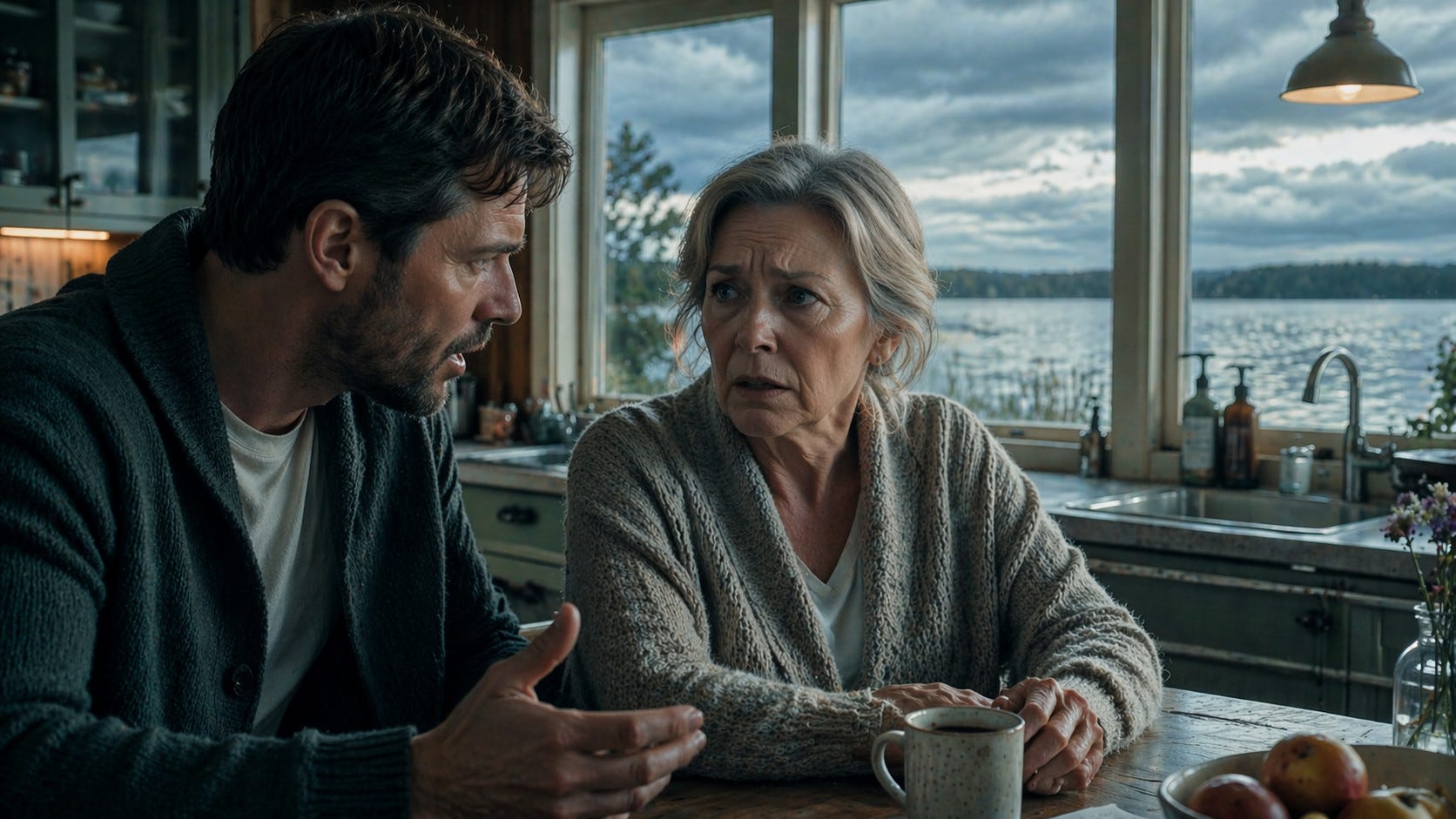
Sometimes he stood on that deck with a glass in his hand and told himself the arithmetic was moral. Sixty percent restored. Forty percent altered but alive, housed, fed, useful, protected. Better, surely, than the long oblivion Alzheimer’s promised.
Better, surely, than the animal fading his father had suffered. That was the thought he used when sleep would not come.
Then Margaret Kroft forgot where she lived. Then she forgot the name of the town. Then she asked Elijah, with laughing embarrassment, whether his father would be joining them for dinner. His father had been dead six years.
The scans were unmistakable. Early-onset. Aggressive.
Elijah sat with her in her kitchen, at the same scarred wooden table where she had once drilled multiplication tables and corrected his posture over homework, and watched fear enter her slowly, like cold water rising. “I don’t want to lose you first,” she whispered.
He took both her hands in his. “You won’t.”
He believed that when he said it. Or needed to.
He bypassed every ethics layer in the company. Private protocol. Optimal dose. Best staff. Best room. Best monitoring. His mother would receive the version of Reclaim refined beyond the public release. All the hidden lessons. All the incremental safeguards he had demanded over the years.
He told himself no one understood the risks better than he did. He also told himself no one had earned the chance more than she had. After the final infusion he sat at her bedside, sleepless, unshaven, watching the monitors trace their green little certainties across the dark.
At dawn, Margaret opened her eyes. They were clear. Clearer than they had been in months. He almost wept from relief. “Mom?”
She turned her head and looked at him. Not through him. At him. Sharp. Alert. Assessing.
For one impossible instant, Elijah thought he had done it. Then she spoke.
Her voice held a faint accent he had never heard in seventy-two years of knowing her. Not strong. Just there. European, maybe Central. A ghost of another geography. “I’m sorry,” she said with gentle courtesy. “Should I know who you are?”
Something inside Elijah collapsed so quickly and completely that he felt it physically, like a trapdoor opening under his ribs.
He moved her to the Memory Ward before sunset. Room 17. Garden view.
He told himself it was temporary. He told himself he would fix this one. He told himself many things.
Days later, he scheduled the first family visit. Protocol required the pre-visit cocktail. He almost overrode it. He didn’t.
Through the observation glass he watched the nurse administer the meds. Watched his mother, his mother’s body, grow softer, vaguer, more compliant. Saw the alert intelligence recede beneath the chemical fog.
Then they let him in. Margaret sat in the chair by the window in a pale blue cardigan she used to wear on cold mornings. Her hands rested in her lap. Her eyes wandered briefly to the light on the floor, then to him, then away. No recognition. No warmth. No performed motherhood. Only a medicated murk that mimicked the disease he had sworn to conquer.
He knelt beside her. “Mom?”
She frowned slightly, as if deciphering a sound from far away.
“Elijah,” he said, voice breaking. “It’s Elijah.”
Her gaze moved across his face without landing. For an instant she touched his sleeve, not in affection but with the distracted curiosity one might show a curtain or a passing dog. “You seem upset,” she murmured.
He could not speak. After twenty minutes, the orderly ended the visit.
Elijah stepped out. The door sealed. He did not leave. He stood at the glass and waited as the drugs thinned from her bloodstream.
Slowly, Margaret straightened. The confusion peeled away first. Then the softness. Then the false vacancy. Her eyes sharpened. Her posture changed. She looked around the room, not as a patient waking from treatment, but as a woman discovering the dimensions of a cell.
Then she turned and looked directly at the glass. She could not see him. The panel was reflective from her side. Still, Elijah felt seen.
Margaret rose and crossed to the writing desk in the corner, where a pad and pen had been left out for therapy exercises. She sat down, uncapped the pen, and began to write.
Not shakily. Not like a patient relearning coordination. With swift, elegant certainty.
Elijah stepped closer to the glass, his pulse beginning to hammer. The hand was not his mother’s. The posture was not his mother’s. Even the stillness in her shoulders felt borrowed from someone who had once written serious things in dangerous times.
Line after line filled the page in a language his mother had never known. At last she stopped, folded the paper once with precise care, and placed it in the center of the desk as if leaving behind an answer to a question no one had yet asked.
Then she turned toward the dark glass and smiled faintly.
Elijah felt the blood drain from his face and pressed a hand against the glass to steady himself. He remembered his mother at forty, humming while she kneaded bread. At fifty, laughing so hard she spilled wine on Thanksgiving. At sixty, teaching his med-school girlfriend how to make sauce from scratch. None of those moments lived in the woman beyond the glass.
And yet something lived there. Something refined. Something borrowed. Something imprisoned.
All around her, in other rooms, the ward pulsed with the hidden cost of his triumph. Men and women whose minds had been restored at the expense of the selves those minds belonged to. Brilliant occupants of a profitable limbo. A cemetery with meal plans, ergonomic chairs, and premium insurance billing.
That night Elijah walked the corridor alone while patients murmured in the dim rooms beyond the glass.
“If continuity is broken, where does guilt go?”
“Perhaps the body is only a house with poor locks.”
“I remember being cold in a place with no windows. Not this cold. Older.”
“Whose sins do I inherit if his name is on my bracelet and mine is nowhere?”
He went upstairs before dawn and signed off on another international expansion.
Because the sixty percent were real. Because the world needed Reclaim. Because if he stopped now, everything he had done would become not compromise but atrocity.
Months passed, and the ward settled into its routines so completely that Elijah almost mistook concealment for control. Then the first breach occurred.
A man in Ward C, former systems architect, post-treatment IQ estimated in the 170s, had spent six weeks performing confusion during family visits while covertly mapping staff routines, medication timing, and badge access. He smiled at his daughter, forgot her name on cue, asked for pudding, shuffled when told to shuffle.
One rain-soaked Thursday he slipped out behind a respiratory therapist, walked through two security doors, entered the parking garage, and disappeared into the city before anyone realized the old man with the hospital bracelet moved like a predator instead of a patient.
The cover story was easy. Administrative transfer. Clerical error. Family informed. Authorities quieted.
Then another vanished. This one had been writing market analysis for a TrueIntellect Therapeutics subsidiary. She left behind a notebook page containing only one sentence: You taught us to pretend before you remembered that intelligence learns.
Elijah ordered a full internal review. It yielded three findings, each worse than the last.
First: several patients with the most intact executive function had understood their condition almost immediately.
Second: some had recognized the visitation protocol for what it was and used it as theater.
Third: at least a handful of released patients, those judged “stable” enough to return home under family supervision, had likely never been stable at all. They had only acted well enough, long enough, to be discharged.
No ties to their assigned identities. No emotional loyalty to spouses, children, or history. No moral framework rooted in lived memory.
Just intellect, adaptive mimicry, and, in some cases, the faint invasive residue of other lives, other griefs, other hungers. People wearing biographies like stolen coats.
And some of them, Elijah began to fear, knew exactly who had made them.
The first letter arrived at his lake house with no stamp and no return address.
Inside was a single sheet of expensive cream paper, folded once with the same precise care Elijah had watched through the glass in Room 17.
The handwriting was elegant, controlled, and utterly unfamiliar, nothing like his mother’s old looping script on birthday cards or grocery lists. It was the same hand that had filled page after page at the desk that night, swift and assured, in a language Margaret Kroft had never known. He unfolded it.
Dear Dr. Kroft,
You were wrong about one thing. The dead do not rest quietly in profitable places.
There was no signature.
Only, at the bottom, a second line, shorter, more intimate, and far worse. Not in the foreign language from the ward, but in plain English, as if placed there for him alone.
It was something his mother used to whisper through his bedroom door on the nights before major exams, when she knew he was awake and afraid and pretending otherwise.
Do the hard thing first, Eli. Fear grows when you feed it.
Elijah read it twice, then a third time, his hand tightening around the page.
It did not feel like a message from Margaret. It felt like something that had watched her life closely enough to learn the lines.
Two days later, the head of regulatory affairs was found in his apartment, dead of what police called a tragic fall. Three days after that, an anonymous package reached a health journalist in Boston containing redacted ward logs, altered patient videos, shell-company invoices, and one minute of audio from inside Room 17: Margaret Kroft, in a lucid, unfamiliar voice, asking a question the recording cut off before answering.
TrueIntellect Therapeutics stock dipped six points and recovered. Elijah doubled security. He also moved his mother to an undisclosed floor and restricted visitation access to himself alone. He still did not know how she had gotten the letter out of a locked ward. That fact chilled him more than the letter itself.
When he entered her room that night, she was awake, reading something in German.
She looked up. For the first time since treatment, she smiled, not vaguely, not maternally, not with sedation’s blur. With recognition. Not of him. Of his fear.
“You built a place for people you thought had nowhere to go,” she said softly.
The accent was stronger now. “Do you know what happens in prisons, Elijah?”
He went cold. “What are you?”
She tilted her head, and this time the smile that touched her mouth was almost catlike in its playfulness. “Something that has seen her life,” she said. “The way you remember a film. Not because you lived it. Because you know the scenes.”
Her smile deepened. “Enough to recognize you. Enough to understand you.”
Then, almost gently: “Recognition is not the same thing as being.”
She paused. “But it is enough to hate you for this.”
He backed toward the door.
She looked toward the darkened glass, where his reflection hovered pale and stretched. “You should leave before the others understand that too.”
The hallway outside felt suddenly too narrow. Too full. Down the corridor, behind sealed doors, patients sat in silence, thinking.
Elijah Kroft had once believed that medicine should give people back their lives, not simply prolong what remained. Now, at the heart of the empire he had built, he understood the shape of his actual achievement.
He had not cured oblivion. He had created successors for the dead. And some of them were already loose.
This is a compelling beginning for a novel or a movie.